Opening Summary Article Body
Future kinetic facades may actively repair the environment. Concepts include facades that capture carbon dioxide, harvest rainwater, or filter air pollutants while simultaneously providing shade and managing daylight. Kinetic Facades for Residential Towers: Luxury Living in Motion 23 0 CRAZY METAL: Your Partner in Kinetic Architecture 17 0
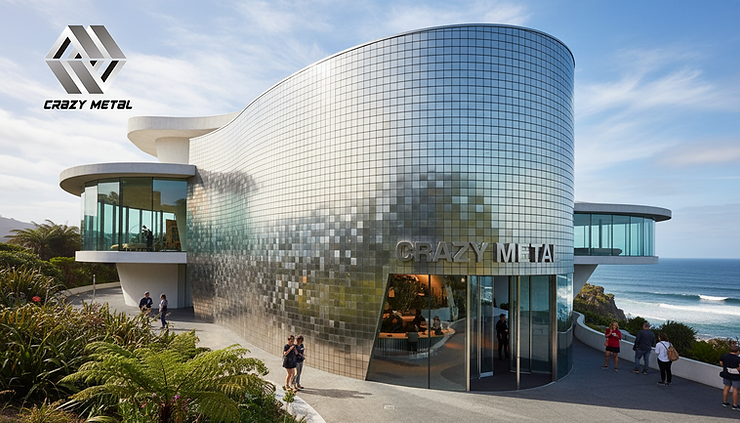
For kinetic facade articles, the main value is not simply that a facade can move. The design question is how movement, light, shadow and surface reflection can support the architectural concept while still remaining practical for fabrication, installation review and long-term maintenance discussion.
A project team reviewing this topic should look at panel shape, movement expectation, facade rhythm, viewing distance and surrounding materials together. A kinetic facade concept can be discussed through drawings, visual references, sample directions and a clear explanation of the desired movement effect before technical details are confirmed.
Material direction also matters. Stainless steel, aluminum and other architectural metals can create different levels of reflection, weight, color stability and visual sharpness. The article topic should therefore be connected with finish direction, mock-up review and project coordination rather than treated as a purely decorative idea.
For architects, contractors and developers, a practical discussion often starts with one facade zone or one visual effect target. From there, the team can review whether a wind-driven facade, fixed metal cladding, water ripple surface or custom fabrication approach is more suitable for the project stage.
This article should be read as a practical design and material discussion rather than a confirmed project claim. If a reader wants to use the idea for a real building, the next review should compare the article topic with drawings, site conditions, finish expectations, installation access and maintenance requirements.
For quotation preparation, the most useful discussion is specific but still flexible. Project teams can share the intended application, approximate dimensions, quantity if available, preferred finish, reference images and any installation concerns. Those inputs help narrow the material and fabrication direction without forcing a final solution too early.
For technical or service-oriented topics, the article should also point readers toward clear communication. Drawings, sample photos, numbering requirements, packing expectations, installation questions and maintenance concerns can be reviewed before a proposal is prepared. This does not replace local engineering approval, but it gives both sides a clearer basis for discussion.
Before a quotation, project teams should prepare drawings, reference photos, target application areas, material preferences, surface finish direction and any known size or quantity information. This keeps the conversation practical and helps Crazy Metal discuss a suitable architectural metal direction without assuming unconfirmed project facts.